
Without guesswork, without scare tactics, and without paying to remove something that was never going to fall.
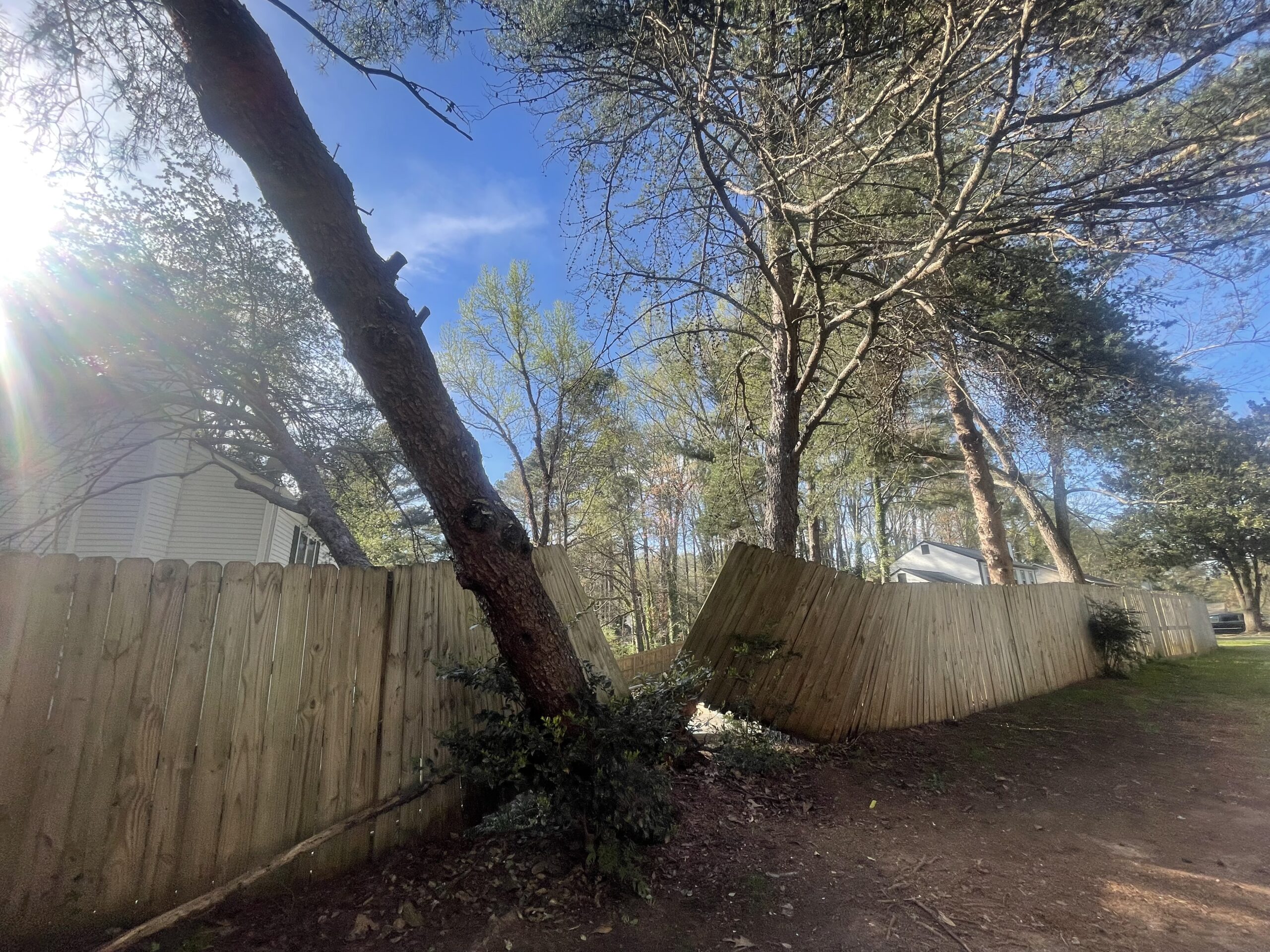
Most people call us the week after they first thought about calling us. A hazard is a tree that's likely to fail combined with something worth protecting underneath it. Both halves matter. A dead pine in the back woods is not the same problem as a dead pine over the kids' trampoline.
We run out of Loganville, which puts Lawrenceville inside our regular working radius. That matters most when something comes down and you need somebody the same day.
We’re regularly out around Downtown Lawrenceville Historic District, Rhodes Jordan area, Collins Hill and Sugarloaf corridor, and anywhere off Riverside Parkway.
~31,000 in the city, but the Lawrenceville mailing address covers a far larger population. Very diverse and rapidly changing — significant Latino, Black, Asian and immigrant communities alongside long-established families. Incomes are middle-market with pockets of affluence. Housing stock is the widest range in the footprint: 1890s historic, 1970s ranch, 1980s–90s subdivision, 2000s–2010s new build
If you’re near Coolray Field (Gwinnett Stripers) and Gwinnett Justice & Administration Center, you’re well inside our area. Lawrenceville sits in County, and we cover the whole of it — along with the rest of Metro Atlanta.
Give us a call and we'll come take a look. No charge, no pressure.
Spring severe season drives emergency volume. Summer thunderstorms. Fall dead-tree calls. Because this is the volume city, it is also the storm-response city — when a line of storms comes through Gwinnett, Lawrenceville generates the most calls
"The square" means the Gwinnett Historic Courthouse square downtown — the center of everything. "Three-sixteen" for GA-316. "Twenty-nine" for US-29 / Lawrenceville Highway. "GGC" for Georgia Gwinnett College. "Coolray" for the ballpark. "Sugarloaf" for the parkway. People say "Gwinnett" as an identity. Lawrenceville is the county seat and residents know it
Same list on a Lawrenceville job as anywhere else we work. It's in the scope before you sign it.
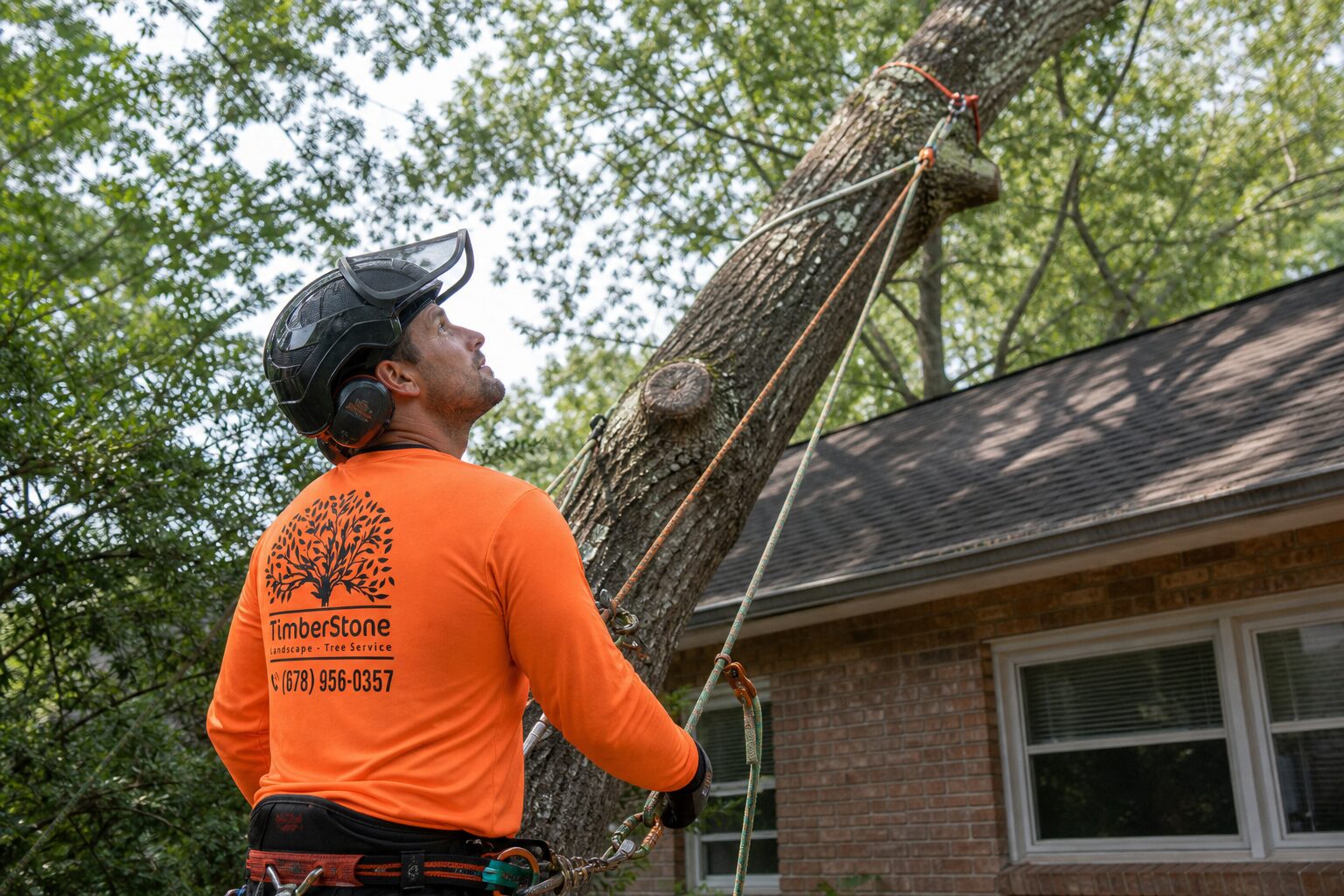
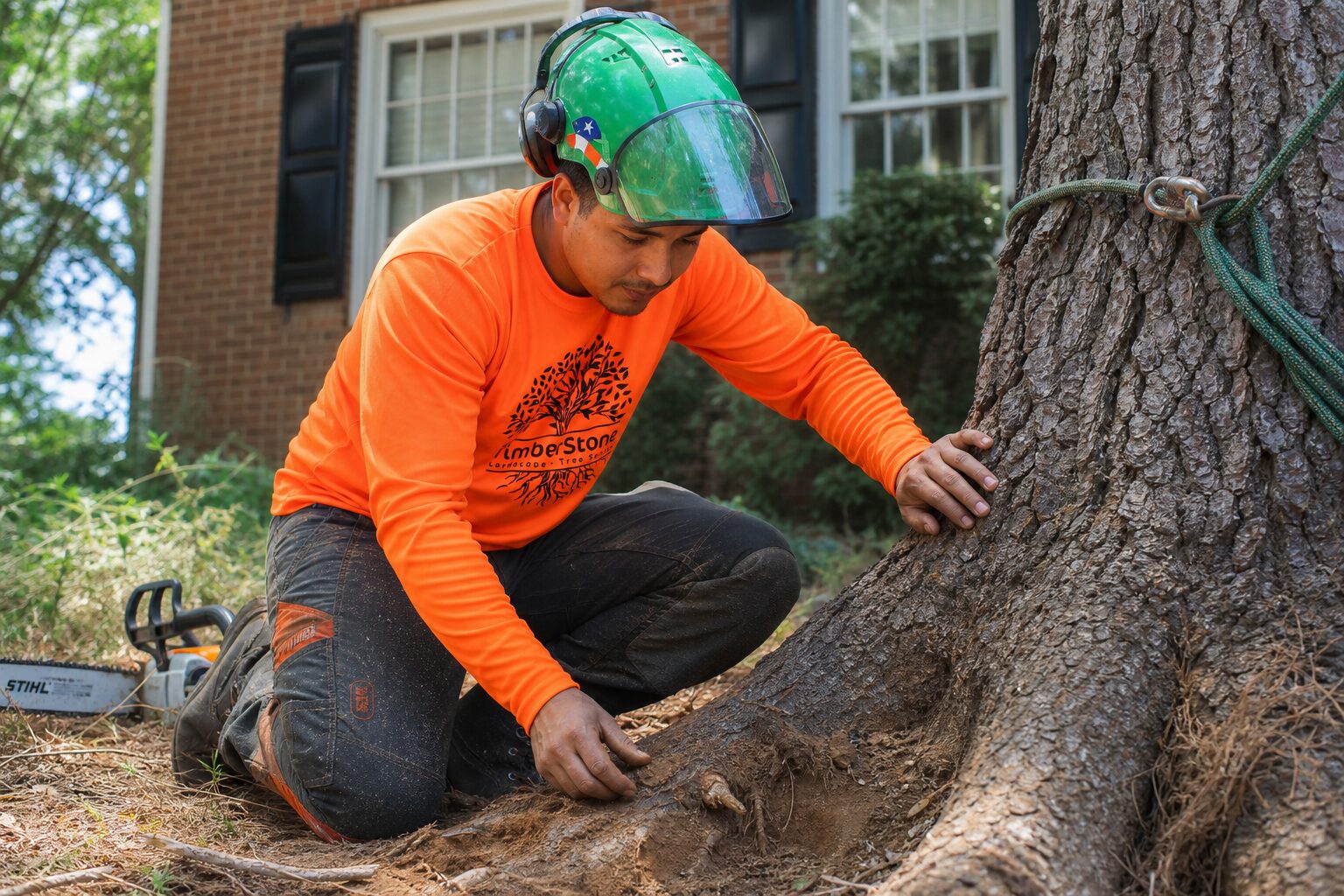
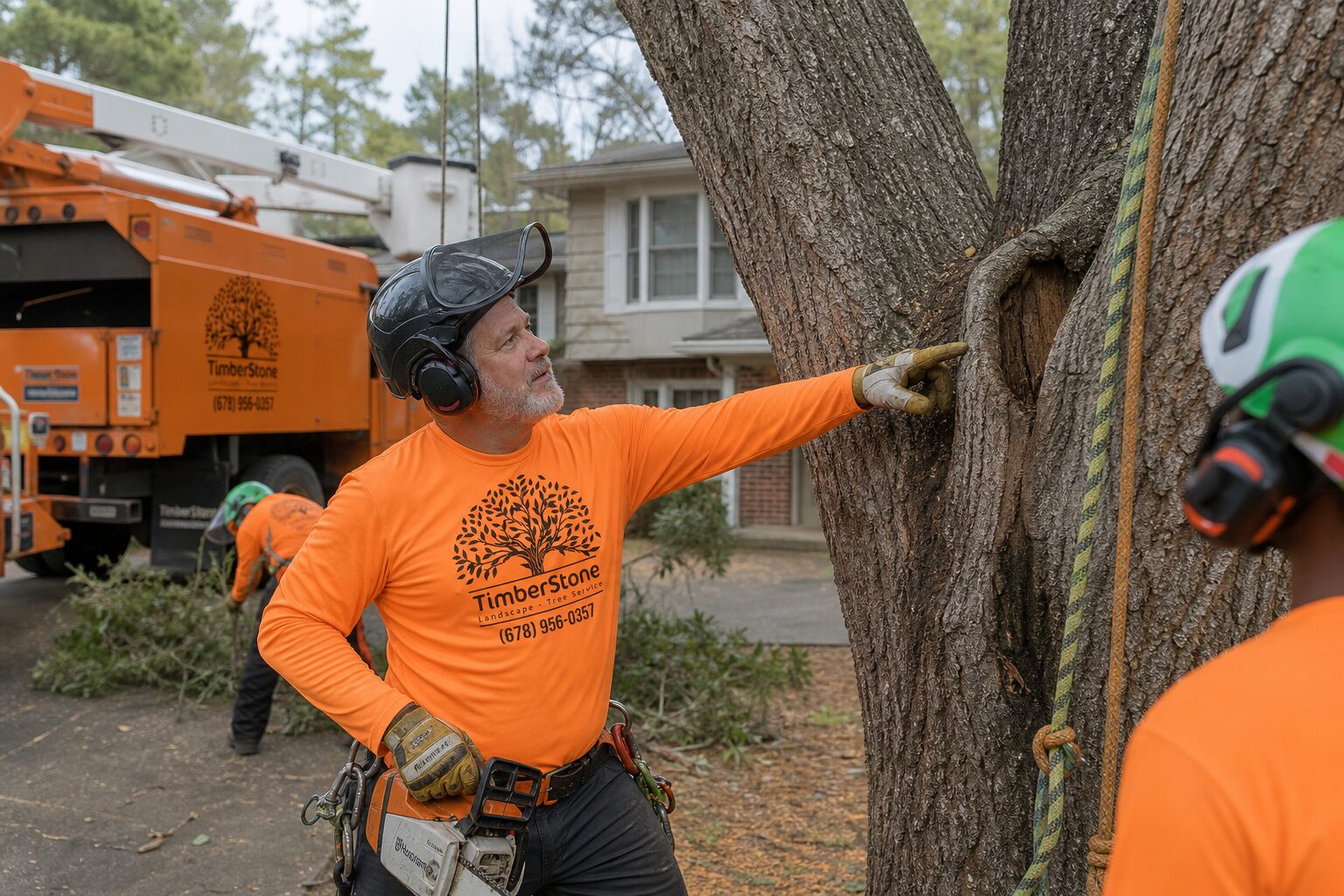
Base to crown: soil heave, root decay, trunk cracks, weak unions, deadwood. Anywhere in Lawrenceville, and there's no charge for the look.
House, drive, lines, play areas, the neighbor's roof. Risk is failure times target.
Remove, reduce, cable or monitor, in plain words, in writing. We haul it off the property, not to the curb.
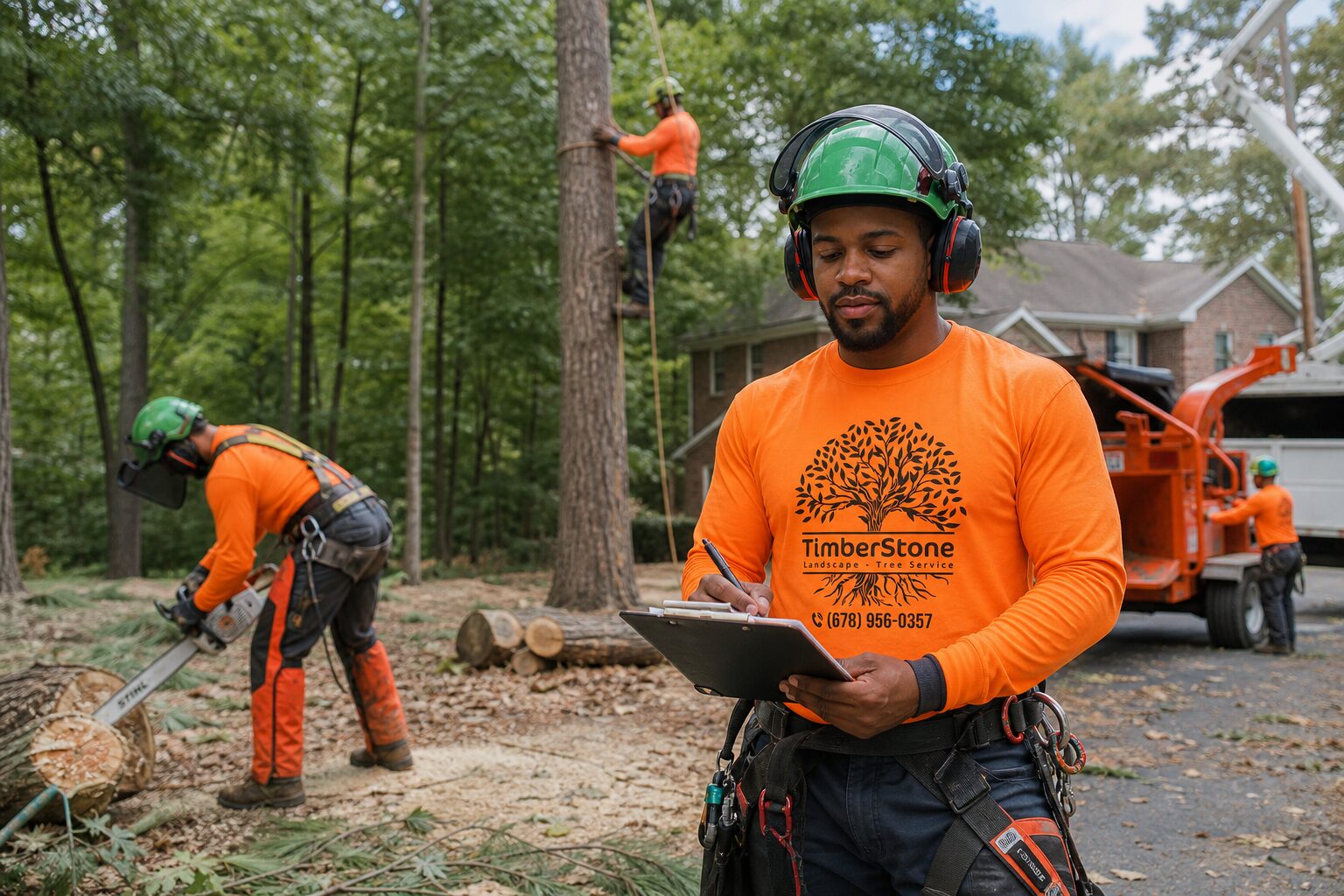
We work Lawrenceville regularly. Our shop is in Loganville and Lawrenceville sits inside our normal service radius, so you're getting a crew that knows the area, not a subcontractor from two counties over. We'd rather be the company you call for the next fifteen years than the one that oversold you once.
Root heave and sidewalk conflicts in older in-town neighborhoods; "city tree or my tree?" comes up constantly That shapes how we plan access and where the pieces come down.
Soil lifting or cracking on one side of the base, mushrooms or conks at the root flare, a vertical crack in the trunk, sudden lean, or a big limb that's lost its leaves while the rest of the tree is green.
No. Plenty of trees have leaned the same way for fifty years. What matters is whether the lean is new and whether the soil at the base is moving.
Proudly serving all of Metro Atlanta from our Loganville shop at 603 Hope Hollow Ln, Loganville, GA 30052. Call (678) 956-0357.
Give us a call and we'll come take a look. No charge, no pressure. Free on-site estimate, written scope, and a crew that cleans up before it leaves.