
Straight answers about cost, safety, cleanup and what happens on the day.
No. The on-site look is free, and we'll tell you if the work can wait.
Yes. Ask for the certificate of insurance and we'll send it before the crew rolls, not after.
For routine work, usually within a few days. For anything urgent, call us and we'll tell you honestly where you are in the queue instead of guessing.
We're based in Loganville and proudly serve all of Metro Atlanta.
Always. Debris hauled, driveway blown off, ruts avoided. The job isn't finished until the property is tidy, and it's in the scope before you sign it.
We can give you a range once we understand the tree, but every quote is site-specific. Size, lean, access, what's underneath and cleanup all move the number, so we come look first.
Dead limbs over a target, a crack in the trunk, soil lifting on one side of the base, or fungus at the root flare are the ones we take seriously. A lot of trees that look scary are fine, and we'll tell you that.
That's the number one thing people ask. We plan access before we start, use mats or plywood on soft ground, and pick the machine that fits the yard instead of the biggest one on the trailer.
Only if you want it. Grinding is a separate step and we quote it separately so you can decide.
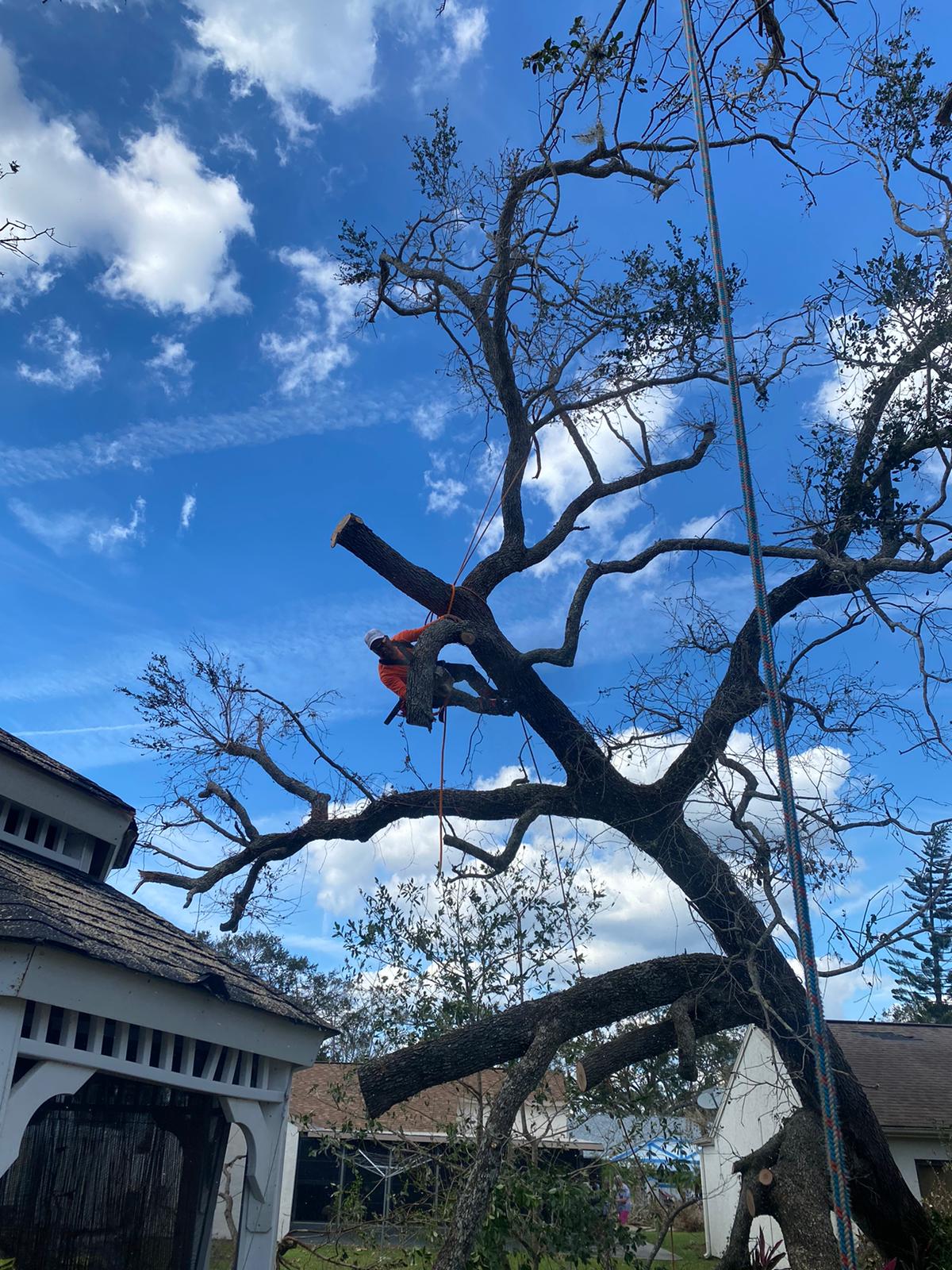
Then it comes down in pieces on rigging lines instead of all at once. That's normal work for us.
During a storm event we run crews as long as it's safe to work. Call and we'll tell you honestly where you are in the queue instead of guessing.
We photograph and document the damage and the work so your adjuster has what they need. We don't file the claim for you.
Stay away from it and call 911 and your utility first. We can't touch an energized line, and no reputable company will.
Often yes. Getting the load off and tarping the opening is usually the first visit, with full cleanup right behind it.
Most mature hardwoods do fine on a three to five year cycle. Young trees benefit from lighter, more frequent structural pruning. Storm-damaged trees are their own conversation.
Late winter is ideal for most species here because the structure is visible and the tree is dormant. Deadwood and hazards can come out any time.
Sometimes. Reducing end weight on the leaning side genuinely helps. If the root plate is lifting, pruning is not the answer and we'll say so.
No. If someone offers to top a healthy tree, get another quote.
Below grade, deep enough to take the root flare. If you're planting or laying sod, tell us and we'll go deeper.
We can haul them off or backfill the hole with them. Backfilling is free and settles over a season; hauling costs a little more and leaves a clean hole.
Usually. Grinders come in different sizes and the small ones fit through a standard gate.
No. Once the stump and flare are ground out the root system dies. Some species send up suckers from surface roots for a season, and those mow off.
Soil lifting or cracking on one side of the base, mushrooms or conks at the root flare, a vertical crack in the trunk, sudden lean, or a big limb that's lost its leaves while the rest of the tree is green.
No. Plenty of trees have leaned the same way for fifty years. What matters is whether the lean is new and whether the soil at the base is moving.
The on-site look is free. If you need documentation for an HOA or an insurer, that's a separate written report.
Sometimes. Reducing end weight or cabling a weak union can buy a healthy tree years. We'll tell you when that's realistic.
Yes, and that's most of what we do. Selective clearing for a homesite, a driveway, a pasture or a view is very common.
Chipped on site, hauled off, or stacked for firewood. Chipping and spreading is usually cheapest; hauling leaves the cleanest site.
It depends on the county, the acreage and whether there's a stream buffer involved. We'll tell you what we know and point you at the right office. Confirm with them, not with us.
That's the goal. We plan machine routes to limit rutting and we tell you up front if the soil is too wet to work without damage.
Not necessarily. Heat and drought stress cause early leaf drop here every year. What matters is whether it leafs out normally next spring and whether there's dieback in the upper canopy.
Conks or mushrooms at the root flare usually mean decay in the root system or lower trunk. That one is worth having someone look at, because it affects whether the tree can stand up.
Mulch is good. Mulch piled against the trunk like a volcano is bad, and it's the single most common avoidable thing we see. Pull it back off the flare.
Sometimes we can reduce the risk and buy time. We won't take your money pretending we can reverse it.
Late winter is ideal because the structure is visible, but any time before severe season beats any time after it.
It reduces it. Removing deadwood and reducing end weight takes out the pieces most likely to break. No pruning makes a tree stormproof, and anyone who says otherwise is selling.
Almost always, because it's scheduled, planned, and there's no roof to work around.
The utility handles the line clearance on their side. What's on your property and near your service drop is yours, and we can help with it.
No. Most near-structure removals are done on rigging lines from a climber or a bucket. A crane is for the ones where reach or weight makes rigging unsafe or slow.
The day rate is higher but the job is often shorter, and on the tight ones it's cheaper than the alternative. We'll price both if it's a close call.
Then nothing gets free-dropped. Pieces are rigged and swung clear, and we cover the tile and coping before we start.
Sometimes it's the safest setup. We'll ask you first and we'll talk to the neighbor ourselves if that helps.
Yes, that's a normal call for us. Tell us roughly how big the pile is and where it sits.
Yes. We do a fair amount of cleanup behind other crews and behind homeowners with a new chainsaw.
We can haul them or cut and stack them for firewood. Stacking is usually less than hauling.
We rake them out. If you want the chips left for mulch, tell us and we'll spread them instead.
Yes, before the first crew arrives. Tell us who needs to be named and we'll have it sent.
Yes. Early mornings and weekends are normal for retail, office and multifamily properties.
That's most of our commercial work. One walk-through per property, one plan, one contact.
Yes, and managed properties are the calls we prioritize during storm events because access and liability are usually urgent.
That's the whole job. Tell us the date and we'll tell you honestly whether we can hold it before you book us.
Yes. Root zone fencing and no traffic inside the drip line, which is the part that actually kills save trees.
Yes, and it's usually cheaper to do it in the same mobilization.
Regularly. Tell us who's coming behind us and we'll leave the site the way they need it.
Call or text us. We'd rather answer it now than have you guessing.