
The Real Cost of Crane Tree Removal in Dacula
There is a belief that a bigger crew is faster. On a tight removal, more people in the drop zone is the opposite of progress. If you are weighing up crane tree removal Dacula right now, this covers how a tree comes down when there is nowhere to drop it, when a crane earns its keep, and what protects the house while we work.
Here is the honest answer up front. crane tree removal Dacula is slower and costs more than a straightforward fell, and it is the only way to do it without damage.
What we run into around Dacula specifically
Hamilton Mill’s 1990s canopy failing at scale, plus three separate river systems putting an unusual amount of wet bottomland in one city That shapes almost everything about how a job gets planned here.
- Three river systems touch Dacula — the Apalachee, the Alcovy and the Mulberry. That’s an unusual amount of bottomland for one city: saturated clay, big riparian hardwoods, uprooting
- Hamilton Mill’s canopy is the headline job source. A very large community built into woods in the 1990s, with retained hardwoods and pines between and behind homes. Those trees are now thirty years past exposure and failing — the buffer-tree problem at large scale, over expensive houses, under HOA review
- GA-316 widening cut root zones along the corridor
- Farmland converting to subdivisions means active builder lot-clearing work and, later, the retained-tree-line failures that follow
So when we are out around Hamilton Mill, Apalachee Farms and Trilogy Park, those are the first things we check. If you are anywhere near Dacula Park and the Apalachee River, or off GA-316, you are well inside our normal run.
Hamilton Mill and Apalachee Farms are large 1990s–2000s master-planned communities on wooded lots with HOA architectural review. Away from them, Dacula is genuinely rural in places — multi-acre lots, pasture, long driveways, real farms still operating
Hamilton Mill is the anchor: large 1990s master-planned community, wooded lots, HOA review, high values Little Mulberry Park is the big landmark; boundary trees along it raise specific questions GA-316 widening cut roadside root zones
Pronounced “duh-CUE-luh.” The name is locally said to come from combining Decatur and Atlanta — residents enjoy telling that story. “Hamilton Mill” is a place, an exit and an identity. “Three-sixteen” for GA-316. “Winder Highway” for GA-8/US-29. “Little Mulberry” for the park. Real Dacula pride and a firm distinction from Lawrenceville That matters more than it sounds, because when somebody calls and says which side of town they are on, we already know the access and the tree cover before we get there.
Spring severe season on the exposed Hamilton Mill buffer trees. Summer storms off the river bottoms. Fall dead-tree calls. Winter clearing and pasture work on the rural side Because of that, the same tree can be a straightforward morning in one month and a genuinely awkward job in another, and we would rather tell you that up front than discover it with a machine already on your lawn. For the wider picture on tree condition and care in this region, UGA Extension publishes solid homeowner guidance.
The cheap quote on a tight tree
We also price honestly between methods. Sometimes a crane is genuinely cheaper because the job takes a third of the time, and we will tell you when that is the case.
Protection should be part of the answer too. Plywood and mats over hardscape, covers on pool coping, and a cleared staging area are all things that get named in advance. That is also why we put the reasoning in writing. You can read what we are seeing and decide for yourself, instead of taking our word for it. If you want the longer breakdown, we walk through it on our technical tree removal cost Dacula page.
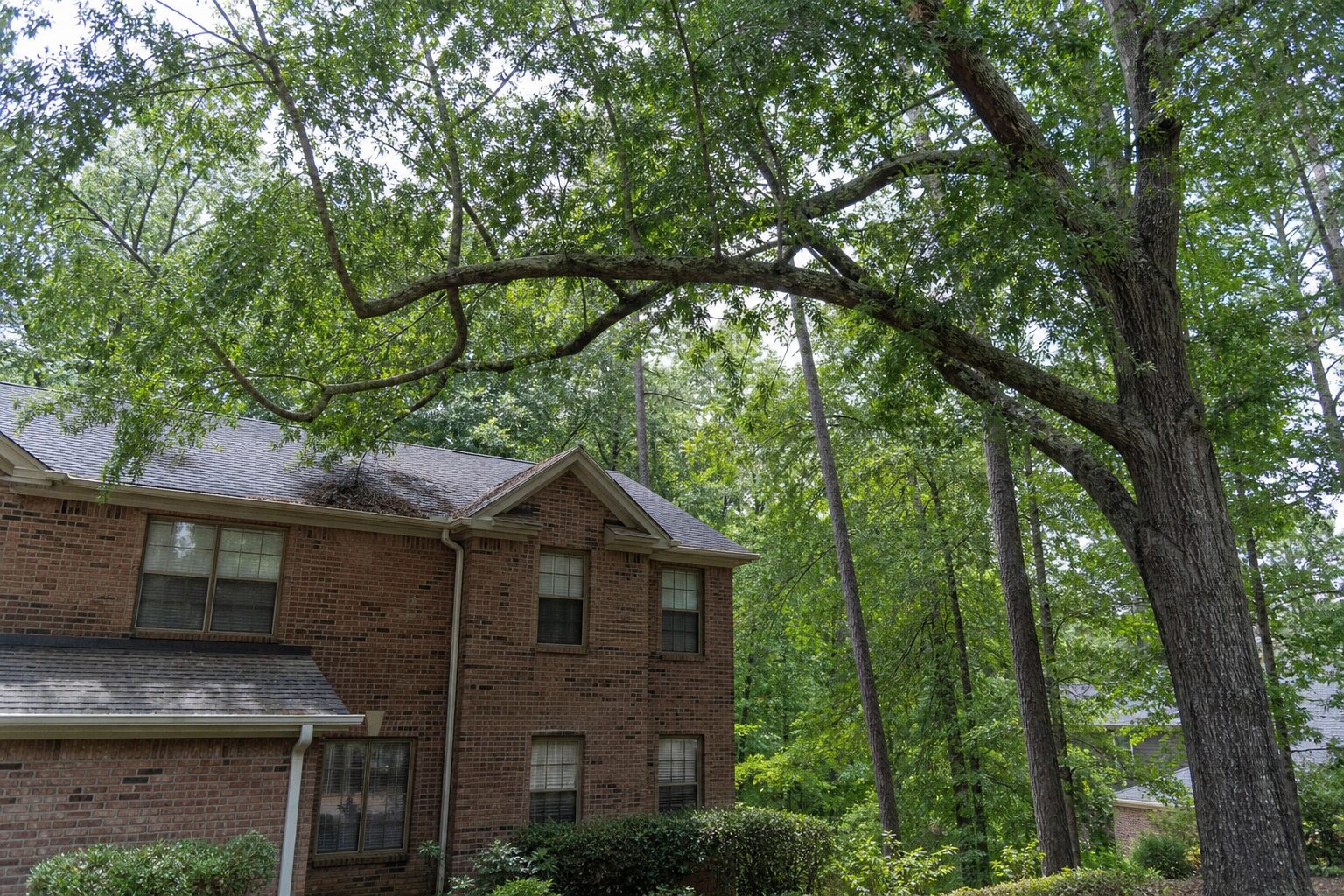
A low quote on a tight tree usually means the rigging hasn’t been planned.
What crane removal actually involves
A crane earns its keep when reach or weight makes rigging slow or unsafe: a very large stem over a structure, or a tree the climber cannot safely dismantle from within.
Where a crane is not justified, we say so and rig it instead, because bringing a crane you do not need is an easy way to inflate an invoice.
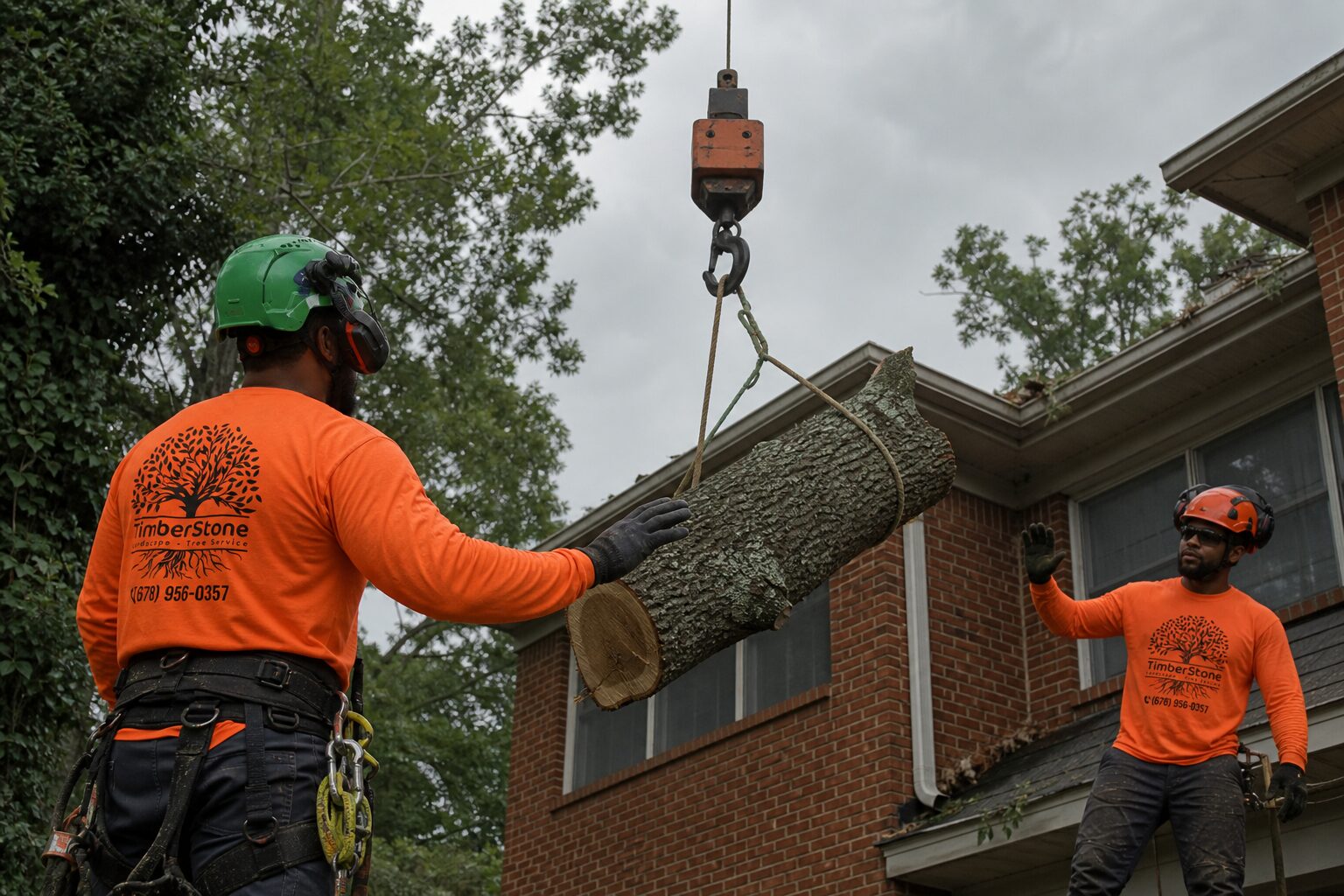
We test with a light pick before anything serious moves, and the crane operator and the climber work to agreed signals throughout.
Setup is the constraint. Outriggers need firm level ground, the swing radius has to be clear of overhead lines, and the machine has to physically reach a position.
That is faster than rigging on the right job, which is why a crane day can cost less in total than three days of climbing on the same tree.
You will have a written scope, a real number, and no surprises on the day.
So why does the same job cost two different numbers? Here’s the honest reason
Here is what most homeowners never get told: the number on a quote is mostly a story about access, not about the tree. Two identical oaks, one by the driveway and one behind a fence in the back corner, are genuinely different jobs.
What happens on the day
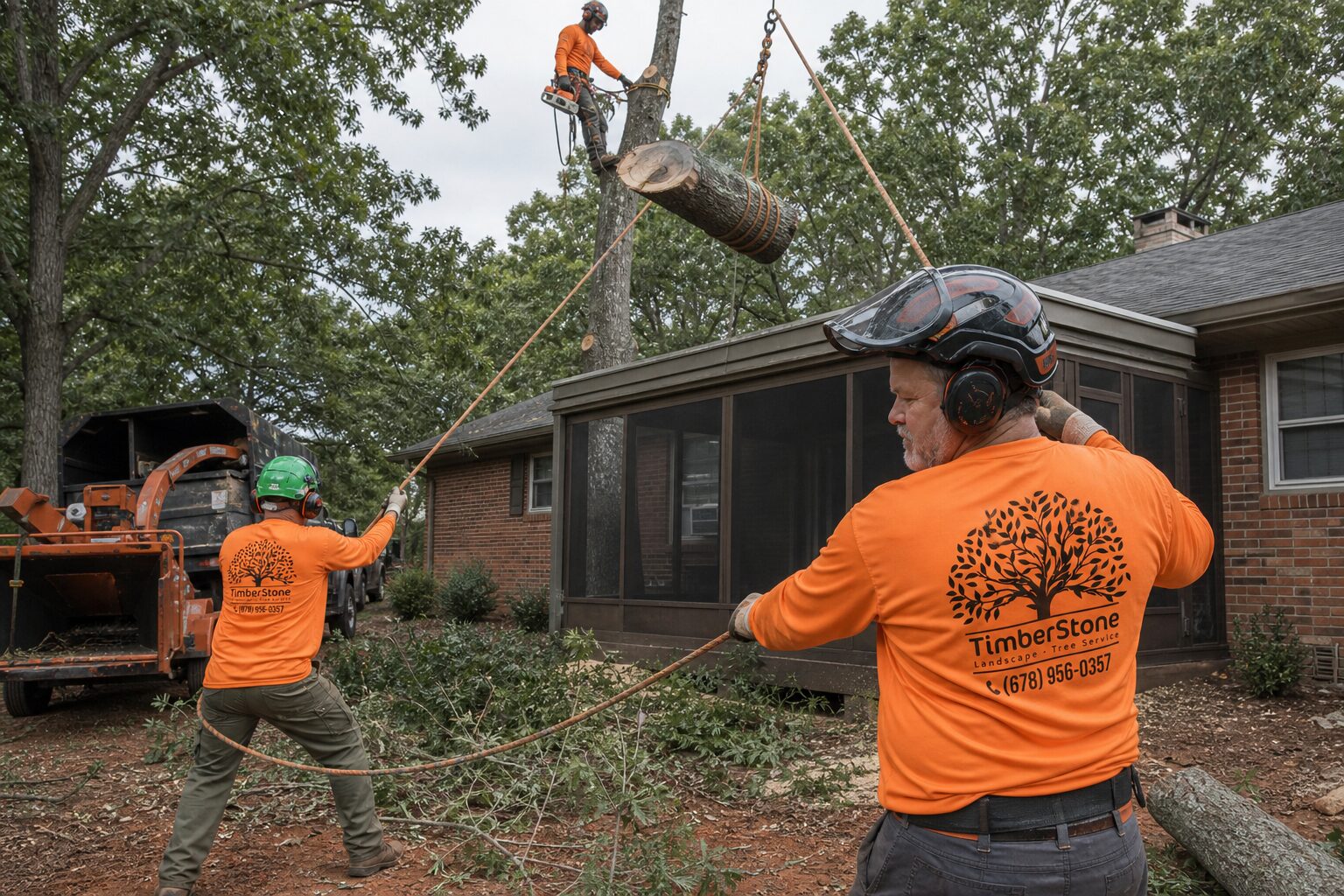
The climber ties in and starts at the top. Small material first to make room, then progressively larger pieces once there is space to move them.
It starts with a plan made on the ground: where the machine sits, which pieces come off in what order, where each one is lowered to, and what gets protected first.
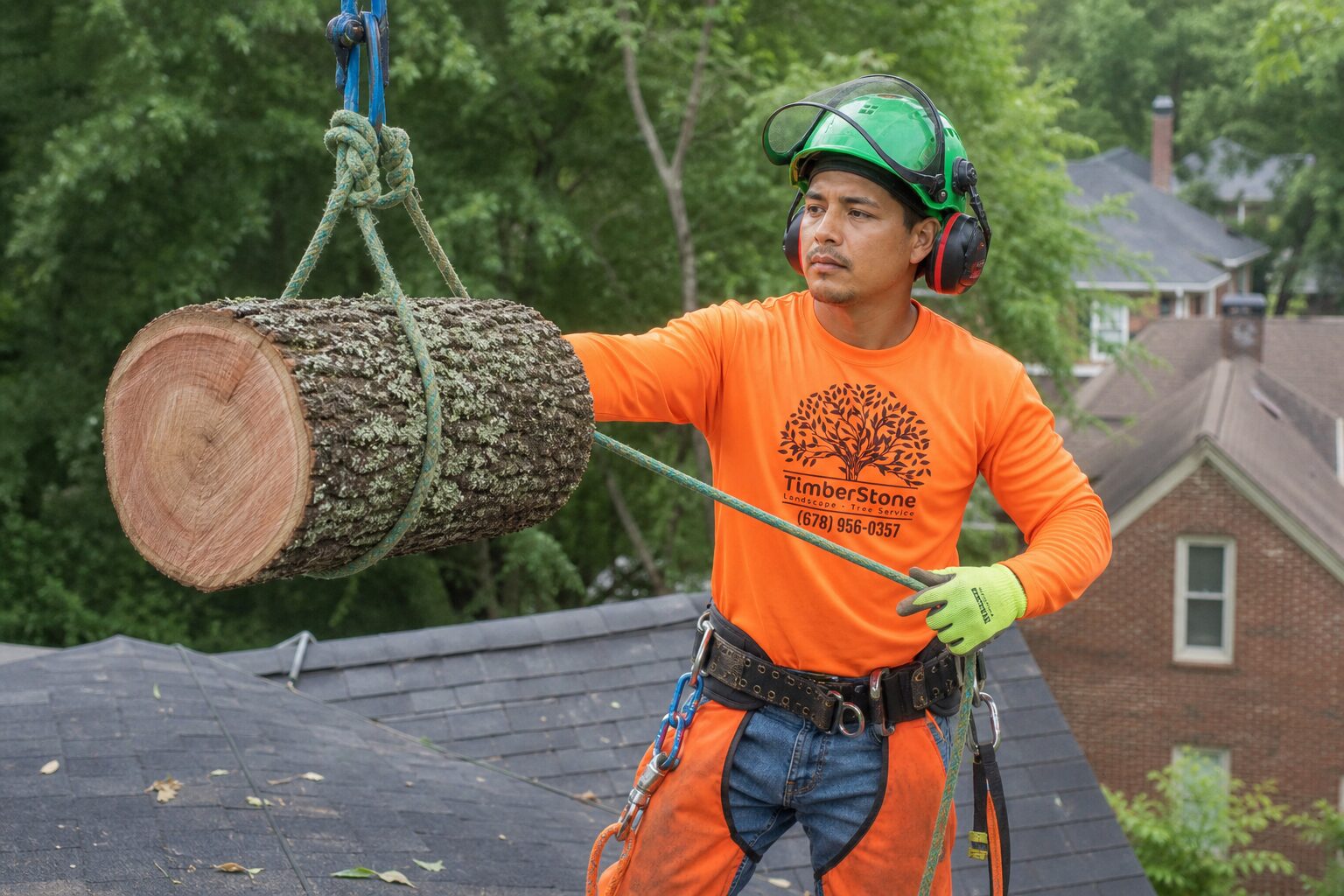
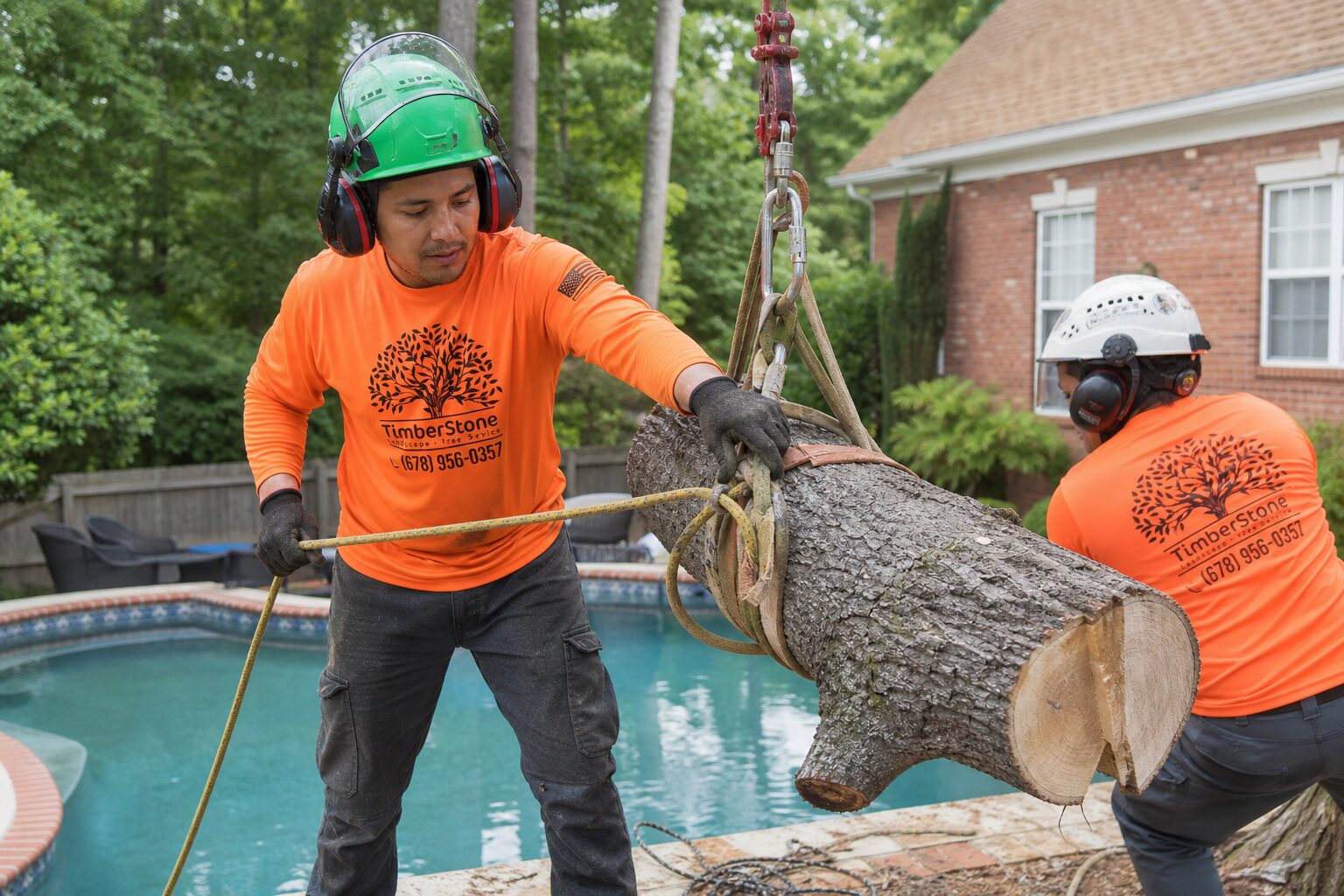
With a crane, the pick is set and the piece is cut free while the crane holds it, then swung clear and set down in the drop zone rather than lowered through the tree.
If a crane is being used, it sets up and gets tested with a light pick before anything serious is lifted. Outrigger pads go on firm ground, and swing radius is checked against everything overhead.
Crane cost versus climbing cost
Crane day rates are high, but crane jobs are often short. On the right tree the total is lower than the climbing alternative, and we will price both when it is close.
Setup and protection are real line items. Matting a driveway and covering pool coping takes time before any cutting starts.
Access to a crane position can be the deciding factor. If the machine cannot get a clear set-up with proper outrigger ground, the option disappears regardless of budget.
And condition adds cost. A decayed stem cannot take rigging loads, so pieces get smaller, the count goes up, and the day gets longer.
What changes about this once you understand how the soil here behaves
Ask any company this one question before they set foot on the property: how is each piece coming down? A company that has thought about the job will answer straight away, in detail. One that has not will talk about how long they have been doing this. The first answer tells you they planned it. The second tells you they did not.
While you are at it, ask for the certificate of insurance. Ask before the work, not after. Any real company sends it the same day, and Georgia Emergency Management Agency is a reasonable place to understand why that paperwork protects you and not just us.
Timing: what actually matters and what doesn’t
Wet ground changes our plan more than cold does. After a long stretch of rain the clay here holds water, and driving a machine over saturated ground is how lawns get wrecked. We would rather push a week.
And if the work is already overdue, the honest answer is that waiting another season rarely makes it cheaper. It usually makes it bigger.
If you are selling, do it before the listing photos. Buyers read an obvious tree problem as something they will inherit, and it shows up in offers more than it should.
The advice we’d give if you weren’t paying us
If the work is on a property line, talk to the neighbor before you book anything. That conversation is far easier before a machine shows up than after.
Write down what you were told on the phone. If the number changes when the invoice arrives, having the original scope in writing settles it in about a minute.
And if you are not sure whether it is urgent, just send a photo. Any decent company will tell you it can wait, for free, because the ones who want your trust play a long game.
Ask who is actually doing the work. Some outfits sell the job and subcontract it out, which is how you end up with a crew that never saw the quote you agreed to.
None of that is complicated, and none of it requires you to know anything about trees. Instead it just means asking two or three questions before the work starts rather than after, because once a crew is in your yard with a saw running your position is weaker.
Why there is nowhere to drop it
The classic case is a tree over a roof. Every limb has to be tied off before it is cut, lowered on a friction device, untied at the bottom, and cleared before the next one.
Pools are worse than roofs in some ways. Tile and coping chip easily, the surround is slippery, and you cannot stage a machine on most pool decks. Because of that, we always start at the base and work up, rather than starting with the part of the tree you can see from the kitchen window.
Then there is access. A tree that needs a crane is no use if the crane cannot reach a set-up position, and outriggers need firm level ground and clearance overhead.
The encouraging bit is that the planning is free, and it happens before anybody quotes you a number.
Standing in the yard at the end
The hardscape is intact because it was covered before anybody started, not because everyone was careful around it.
And the risk that had you worried every time the wind picked up is simply no longer there.
There are no ruts across the lawn, because the machine route was planned and matted rather than improvised. If you are thinking further ahead, our tight access tree removal Dacula page covers what the rest of the property might need, and technical tree removal cost Lawrenceville is useful if you are comparing options nearby.
Keep reading
Where We Work Around Dacula
Where We Work Around Dacula
Our shop is on Hope Hollow Lane in Loganville, which keeps drive times short across this side of town. Beyond Dacula itself, we’re regularly out in Hoschton, Lawrenceville, Auburn, Winder, Buford, Grayson, Braselton and Bethlehem. Same crews, same equipment, same cleanup standard, wherever the job is. And we’re proudly serving all of Metro Atlanta from the same shop, so if you’re just outside that list, still call. For the service overview, see technical & near-structure removal in Dacula.
Questions We Get About Crane & Technical Removal in Dacula
What happens if something gets damaged?
That is exactly what the insurance is for, and you should verify the certificate before work starts on any job over a structure. Ask for it to be sent to you directly.
Do you need access to my neighbour’s yard?
Sometimes it is the safest setup. We will ask you first, and we are happy to speak to the neighbour ourselves if that makes the conversation easier.
Do I always need a crane?
No. Most near-structure removals are done on rigging lines from a climber or a bucket. A crane is for trees where reach or weight makes rigging slow or unsafe, and it is often about speed rather than possibility.
Can you remove a tree from a back garden with no vehicle access?
Usually yes. Small tracked machines get through standard gates, and where nothing fits, a crane over the house is sometimes the cheapest way in.
What if the tree is over my pool?
Then nothing gets free-dropped. Pieces are rigged and swung clear, and we cover the tile and coping before we start. Pools need more protection than roofs, not less.
Why is the quote so much higher than for a tree in the open?
Because the price tracks controlled pieces rather than tree size. A tree that can be felled whole takes minutes; the same tree lowered piece by piece past a conservatory takes a day.
Got a tree in Dacula you’re not sure about?
One call, a real look at the tree, and a straight answer.
(678) 956-0357